PROJECT INSIGHT ·
I Have Been Scanning My Mail for More Than Ten Years
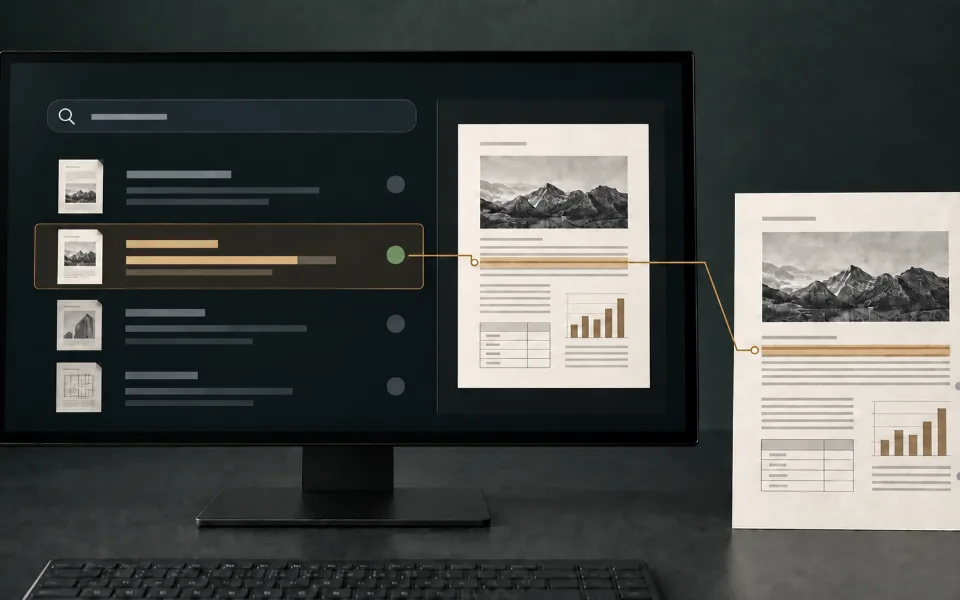
I have scanned almost every letter for more than ten years. Today I ask my archive a question and receive the answer together with its source.
What is the deductible on my home contents insurance? The answer is in a letter I scanned years ago and have not opened since. In the past, I would have wondered whether I filed it under insurance, the year the policy began, or the documents for the house. Today I type the question exactly as it occurred to me.
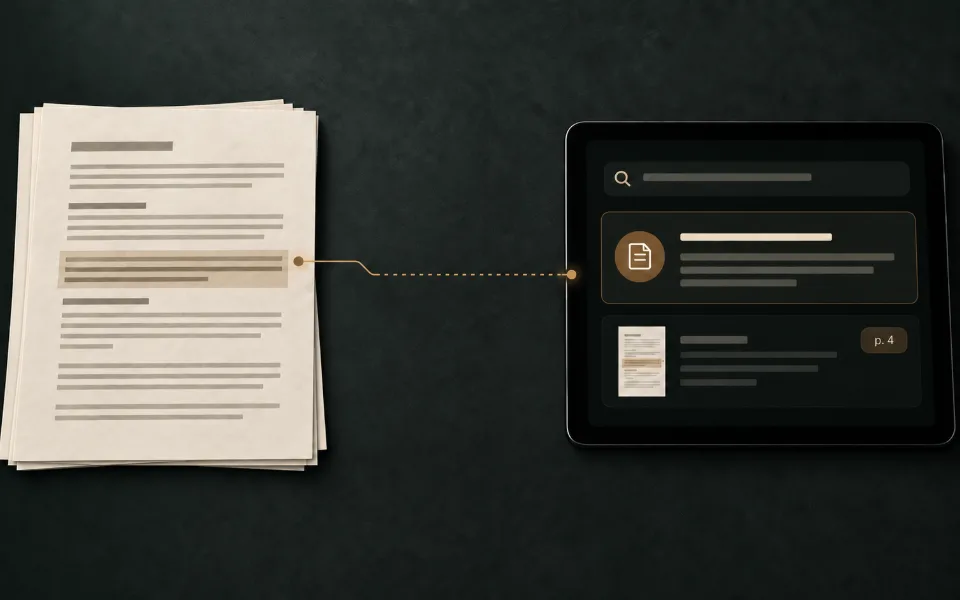
One or two seconds later, the amount appears. Below it is the insurance policy it came from and the page on which it appears. One click opens the original.
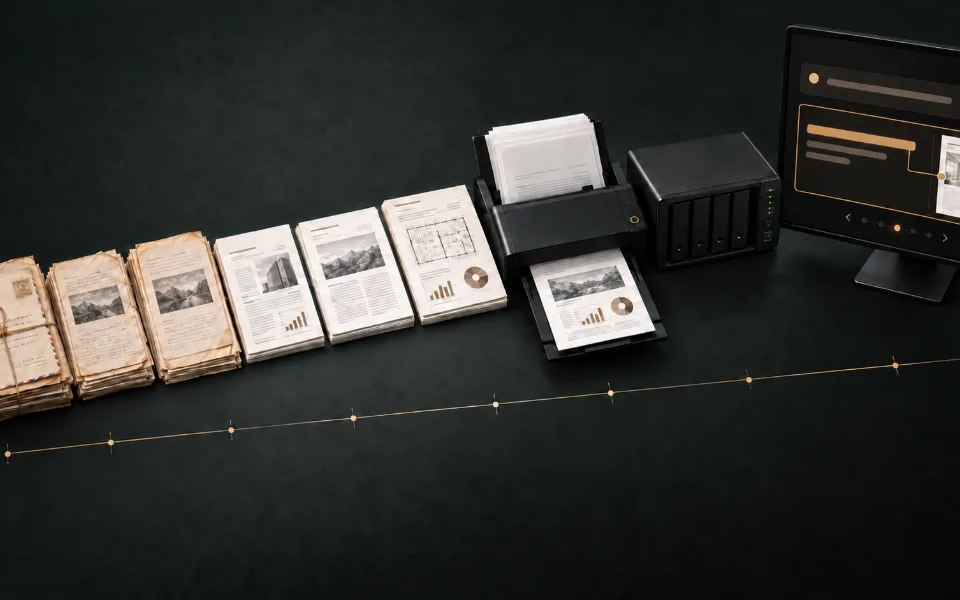
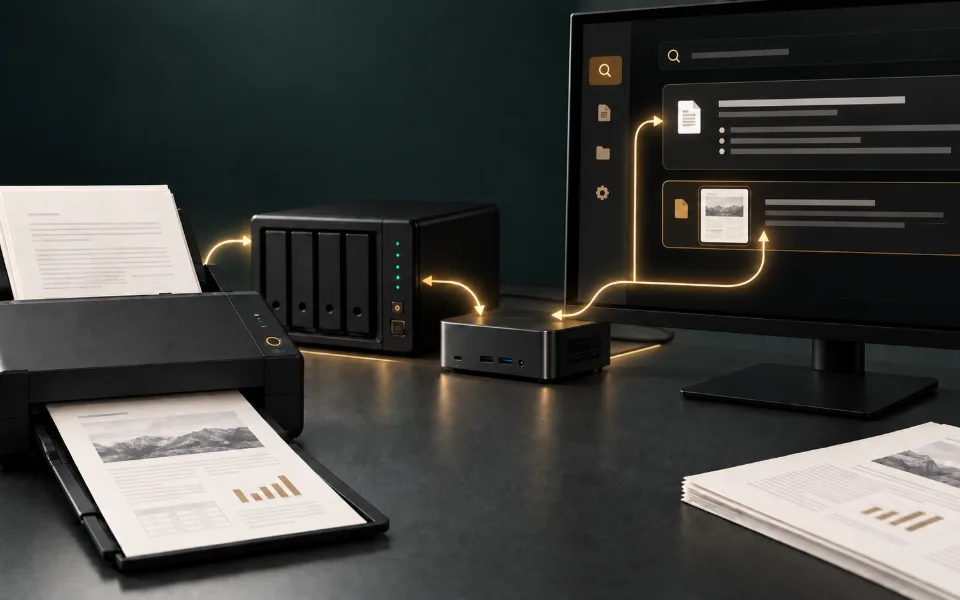
*AI-generated illustration: More than ten years of mail pass through a scanner and local storage to become an answer that points back to its letter. The documents shown contain no real data.*
The fact that this looks so uneventful is the result of a long journey. This series tells that story.
Paper Became a Digital Memory
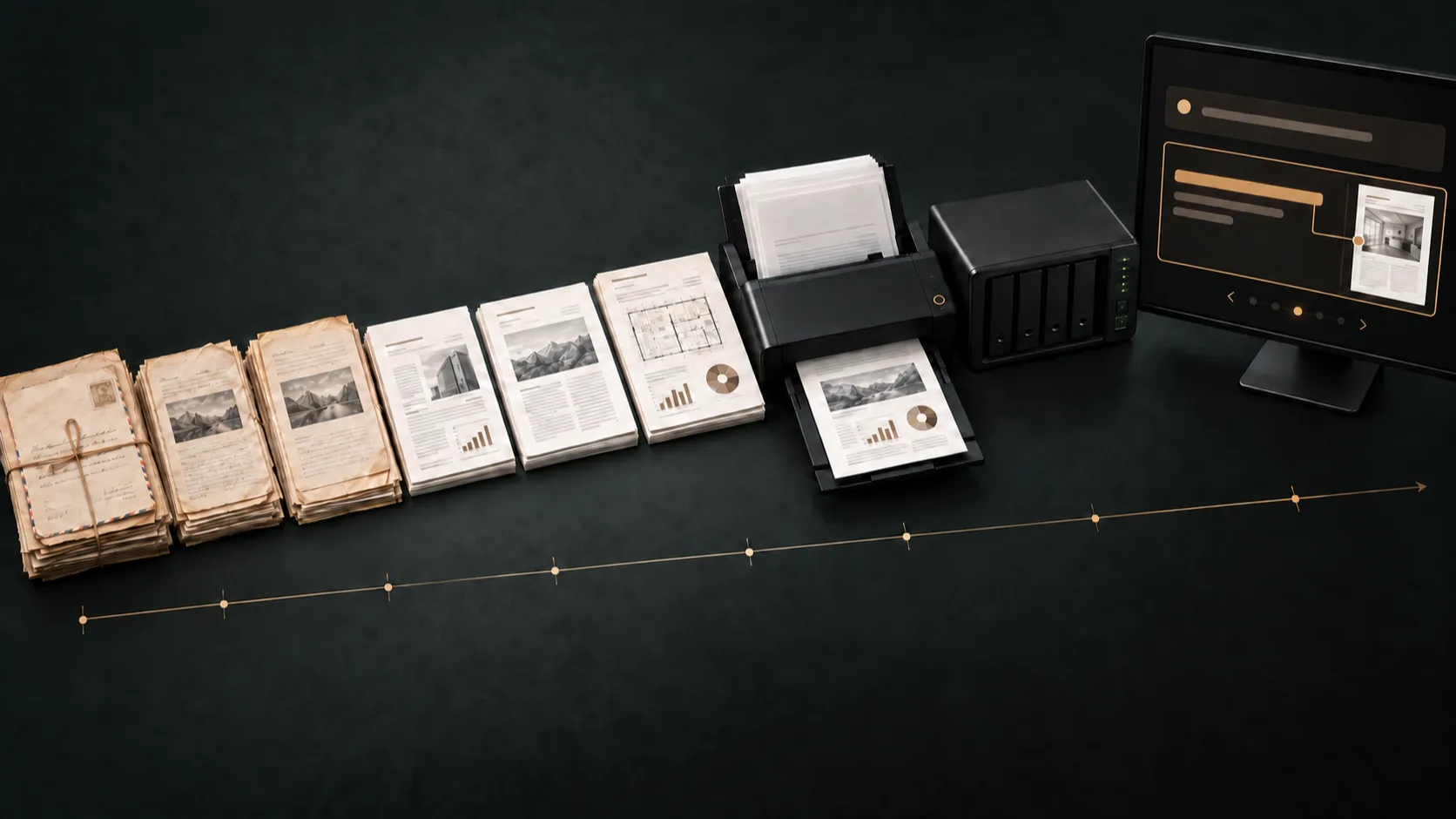
For more than ten years, I have scanned almost every letter that reaches me: invoices, contracts, and correspondence from insurers, tradespeople and public authorities.
It began for a practical reason. Paper takes up space and is never where you need it. I can back up and copy a file, then keep it on my own storage.
Over the years, however, it has become more than a folder full of PDFs. This archive records which contracts I have, what an insurance policy covers, what a repair cost and when a fee changed. It is a kind of personal memory — but one that used to be difficult to access.
Folders Reflect Yesterday’s Decisions
My filing system is not chaotic. It is reasonably organised and helps me narrow down an area. Even so, it has a limitation that no folder structure can overcome.
When I file a document, I have to choose exactly one place. An insurance letter could belong under the year, the insurer, the house or the policy. Each choice would make sense, but the folder can only be one of them.
Years later, I remember something completely different. I still know what it was about, but no longer when the letter arrived. Or I am not looking for the document at all — only for an amount on page three.
The filing system is not wrong at that moment. It simply speaks a different language from my memory.
I was not looking for a PDF. I was looking for the information inside it.
What Searching Actually Involves
Anyone who has digitised a paper archive knows the routine:
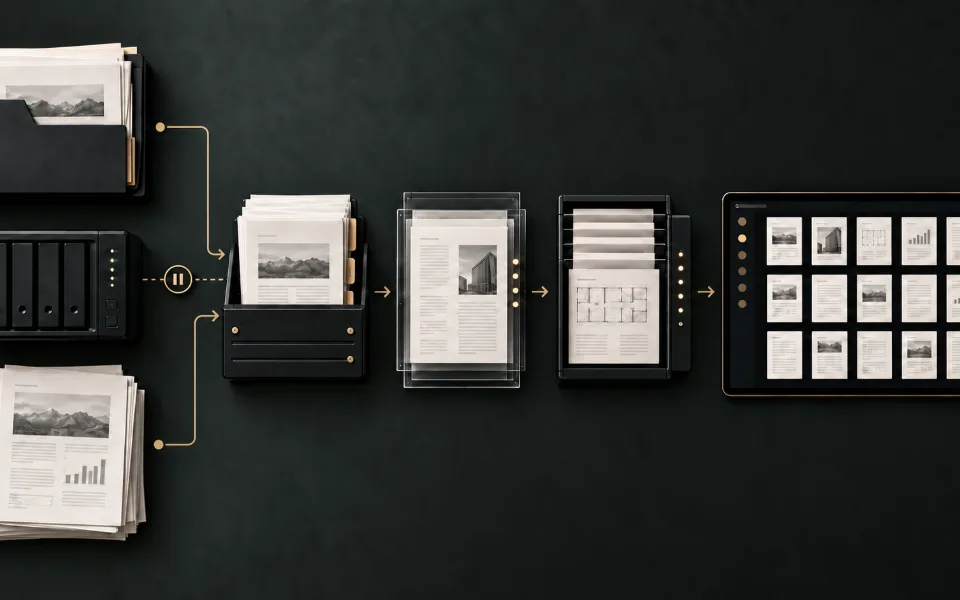
1. choose a likely folder; 2. scan the file names; 3. open several PDFs; 4. search the document for a term; 5. discover that the scan contains no text at all; 6. go back and open the next candidate; 7. compare an amount with another letter.
That is tolerable for a single document. Across an archive spanning more than ten years, it happens again and again. At that point, I no longer wanted to organise better. I wanted to search differently.
I Wanted Answers, Not Files
The questions I ask my archive never begin with a file name:
- What is the deductible on my home contents insurance?
- When is the deadline for cancelling a contract?
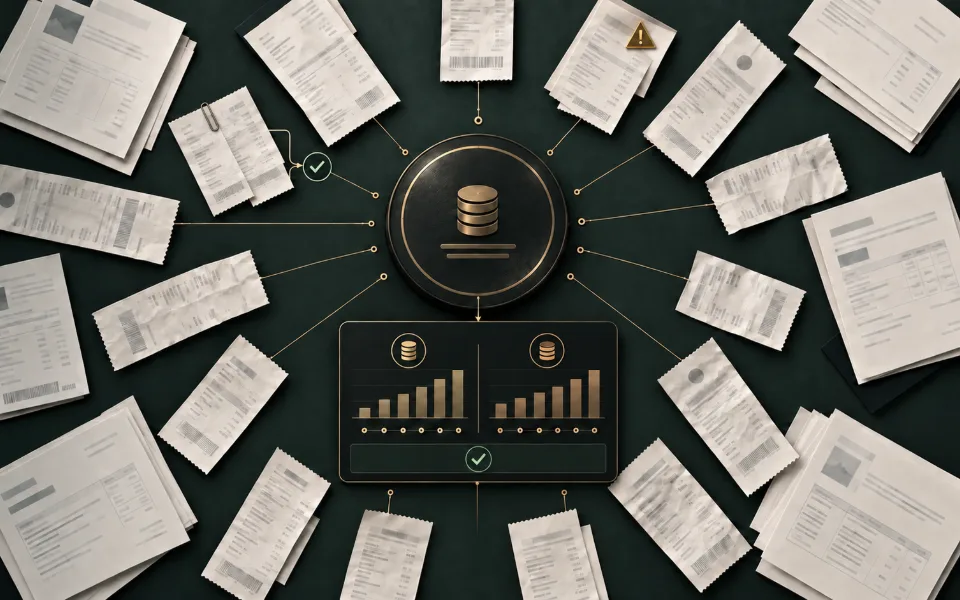
- How much did a renovation cost me in total?
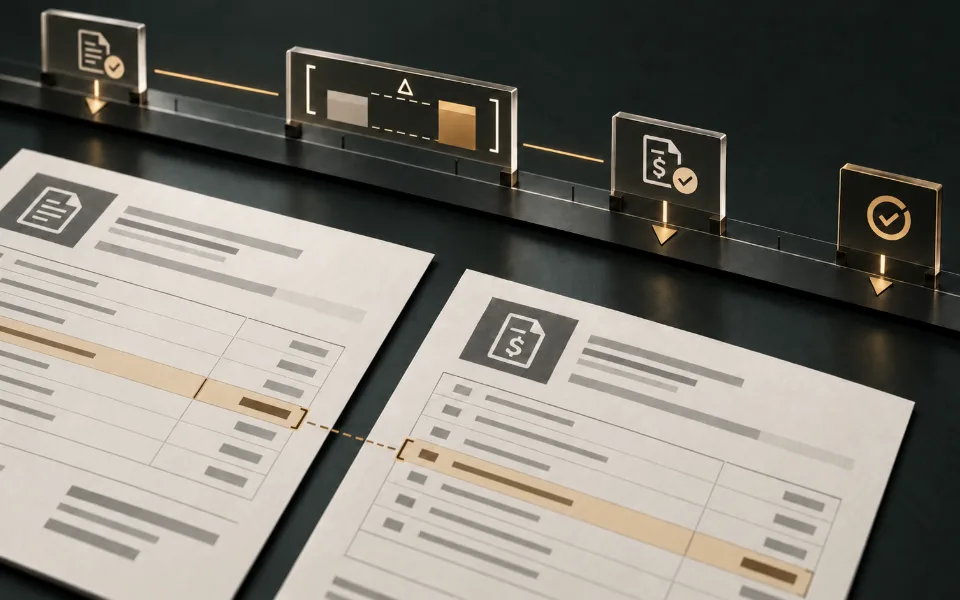
- How much more expensive was the invoice than the quote?
- What changed in the new contract compared with the old one?
Some can be answered by one sentence in one letter. Others require several documents, a complete total or a careful comparison. That is exactly how Operus Search came about.
What It Took
It was clear from the beginning that better file search alone would not be enough:
| Task | Why it matters |
|---|---|
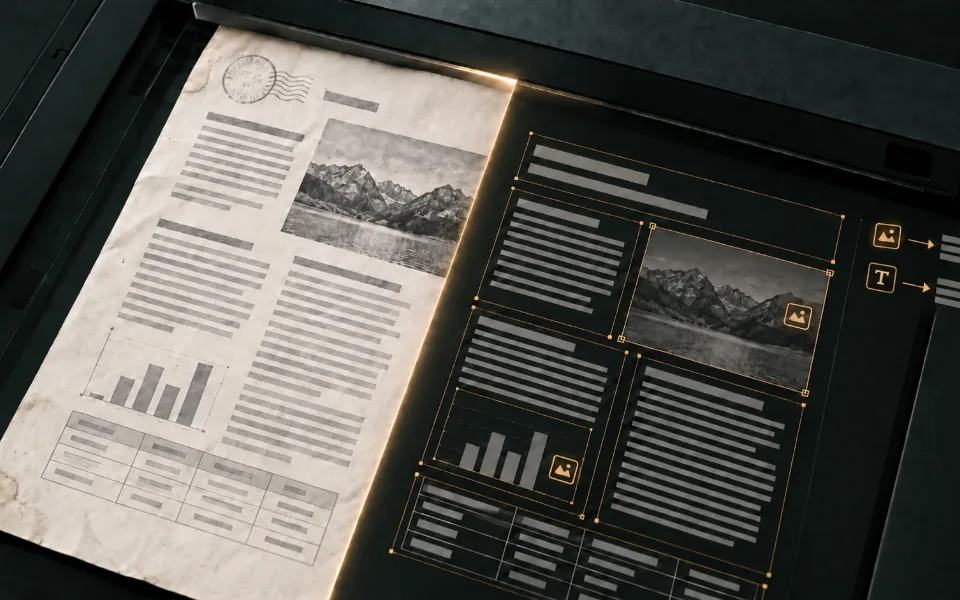
| Read letters | A scan begins as an image without text. |
| Make content searchable | Search has to work inside the document, not just on the file name. |
| Understand meaning | My question rarely uses the same words as the letter. |
| Show sources | An answer has to be based on my actual documents. |
| Calculate correctly | Totals and differences must not be guessed. |
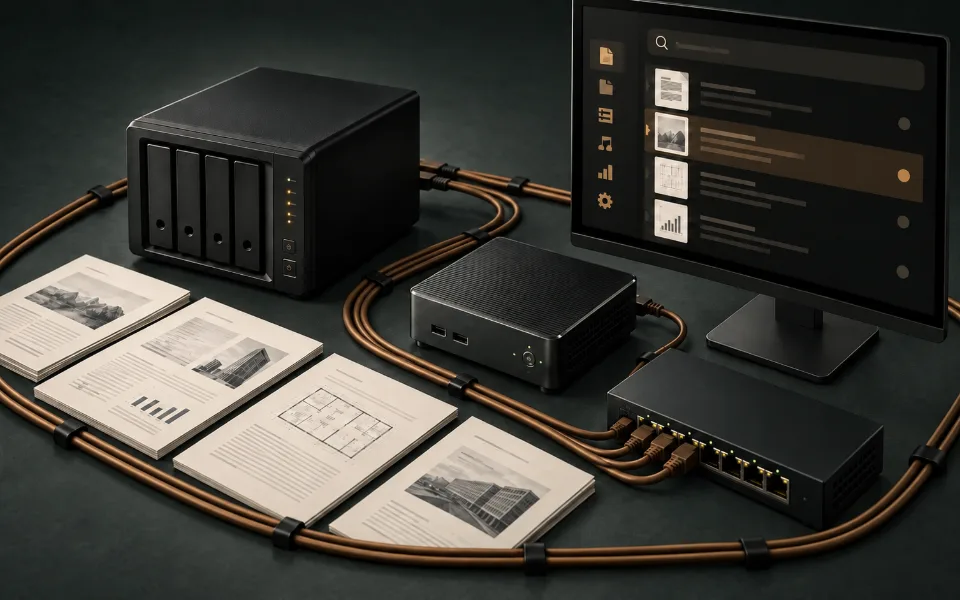
| Stay private | These letters do not belong in someone else’s cloud. |
Artificial intelligence is only one component in this list — and not the first one. Before a language model can answer a question, the archive has to be readable, searchable and dependable.
The following parts are therefore not a feature list. They tell the story of the obstacles between a folder full of scans and this one answer: difficult-to-read letters, German word forms, a NAS that may occasionally be unavailable, and the question of which tasks are better left outside a language model altogether.
The first decision, however, came before a single line of search code existed. It concerned where my letters would remain.